
Plantar Fasciitis Treatment in Roswell, GA: Why It Keeps Coming Back and How to Finally Fix It
- Dr. William Duncan PT, DPT

- Jul 11
- 3 min read
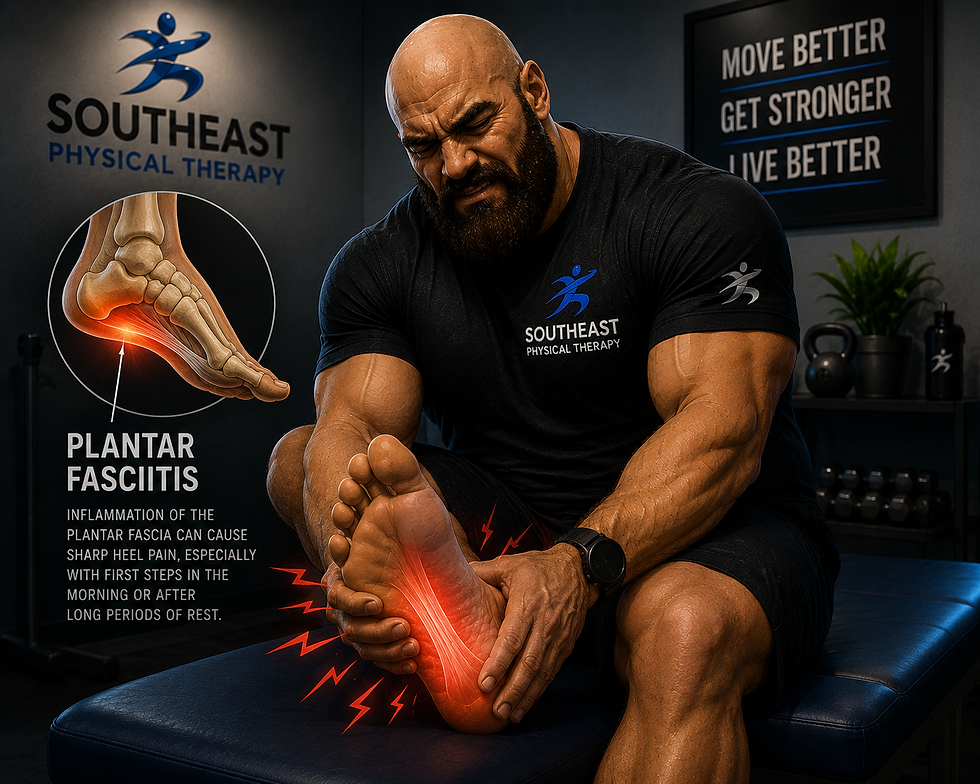
You know the feeling. That stabbing pain in your heel the second your feet hit the floor in the morning. It eases up once you get moving, so you tell yourself it's fine — until it flares again after a long day, a run, or standing too long. You've tried the inserts. The night splint. The rolling-a-frozen-water-bottle trick. It calms down for a while, then comes roaring back. Sound familiar? Here's the truth about plantar fasciitis treatment in Roswell, GA: if it keeps returning, it's because the real cause was never addressed.
What Plantar Fasciitis Actually Is
The plantar fascia is a thick band of tissue running along the bottom of your foot, from your heel to your toes. When it gets overloaded faster than it can handle, it becomes irritated and painful — classically worst with those first steps in the morning or after periods of rest. The pain is real, but here's the key: the fascia is usually the victim, not the culprit.
Why Plantar Fasciitis Keeps Coming Back
Most plantar fasciitis treatment fails because it only chases the symptom. Inserts cushion the heel. Stretching gives temporary relief. A cortisone shot quiets the pain. But none of those address why your fascia got overloaded in the first place. If the underlying problem is still there, the pain has every reason to return.
The usual suspects driving recurring plantar fasciitis include tight or weak calves that change how load travels through your foot, weak foot and ankle muscles that can't share the workload, poor hip and lower-body mechanics passing extra stress down to the foot, and training or activity loads that ramped up faster than your tissue could adapt. Treat the heel alone and ignore these, and you're stuck in the flare-calm-flare cycle indefinitely.
How We Approach Plantar Fasciitis Treatment in Roswell, GA
This is where our root-cause philosophy changes the game. We don't just look at your foot — we assess the entire chain to find out why your plantar fascia is getting overloaded. That full-body view is the difference between calming a flare-up and actually solving the problem.
Depending on what we find, your plantar fasciitis treatment in Roswell, GA might include hands-on manual therapy to release restricted tissue, dry needling to calm down an irritated area and improve blood flow, progressive strengthening for the foot, ankle, and calf so the tissue can finally handle your life, and smart load management so you're not stuck on the couch while you heal. We rebuild capacity instead of relying on a cabinet full of inserts and splints forever.
Why Stronger Beats Softer
Here's the mindset shift that finally fixes plantar fasciitis: your foot doesn't need to be protected indefinitely — it needs to be capable. Cushioning and bracing offload the tissue, but a tissue that never gets loaded never gets stronger. The lasting fix is building a foot and lower leg that can take a pounding, so the fascia stops getting overwhelmed in the first place.
The following are some of the exercises that are prescribed for plantar fasciitis.
Finally Fix Your Heel Pain for Good
If you've been fighting heel pain for months — or it keeps coming back no matter what you try — you don't need another insert. You need a plan that addresses the root cause.
Every session at Southeast PT is one-on-one with Dr. Will Duncan, never handed off to a tech. As a fully out-of-network practice, we answer to you and your goals, which means we can treat efficiently and aggressively to get you back on your feet — pain-free.
📞 Call Southeast PT at 678-640-4606 to book your one-on-one evaluation in Roswell. Let's finally fix this. Move better, get stronger, live better.


Comments